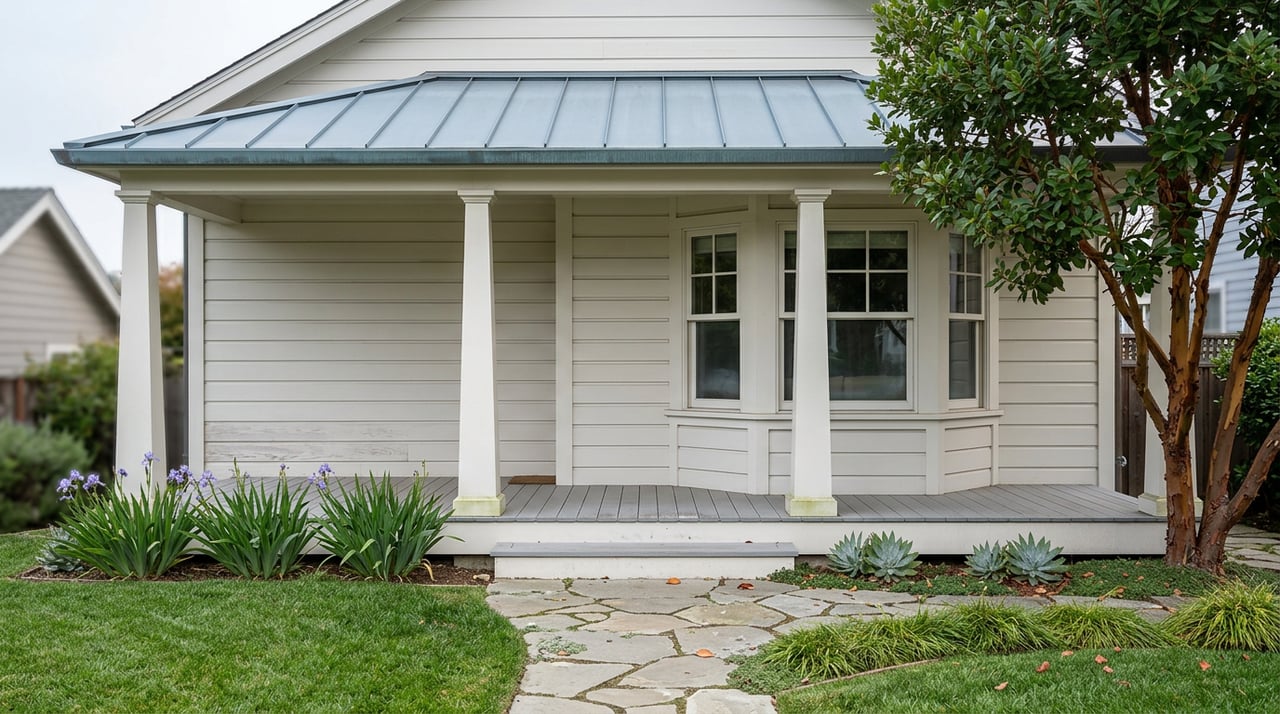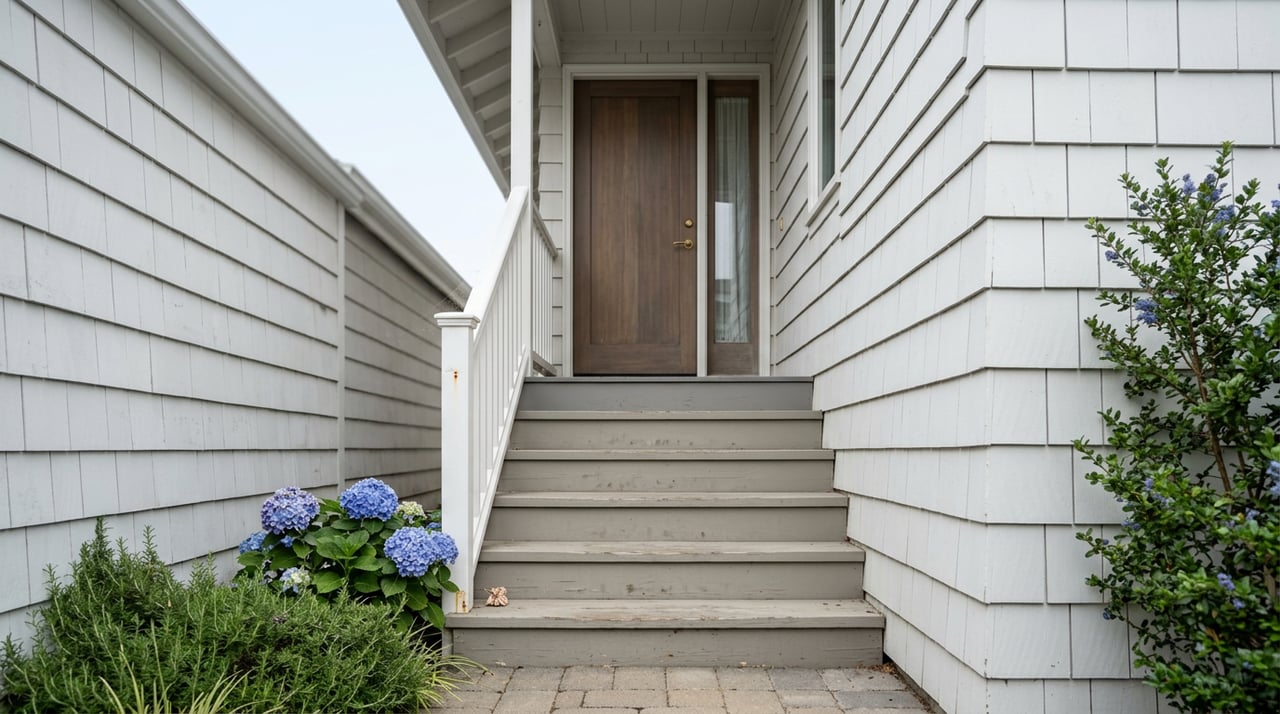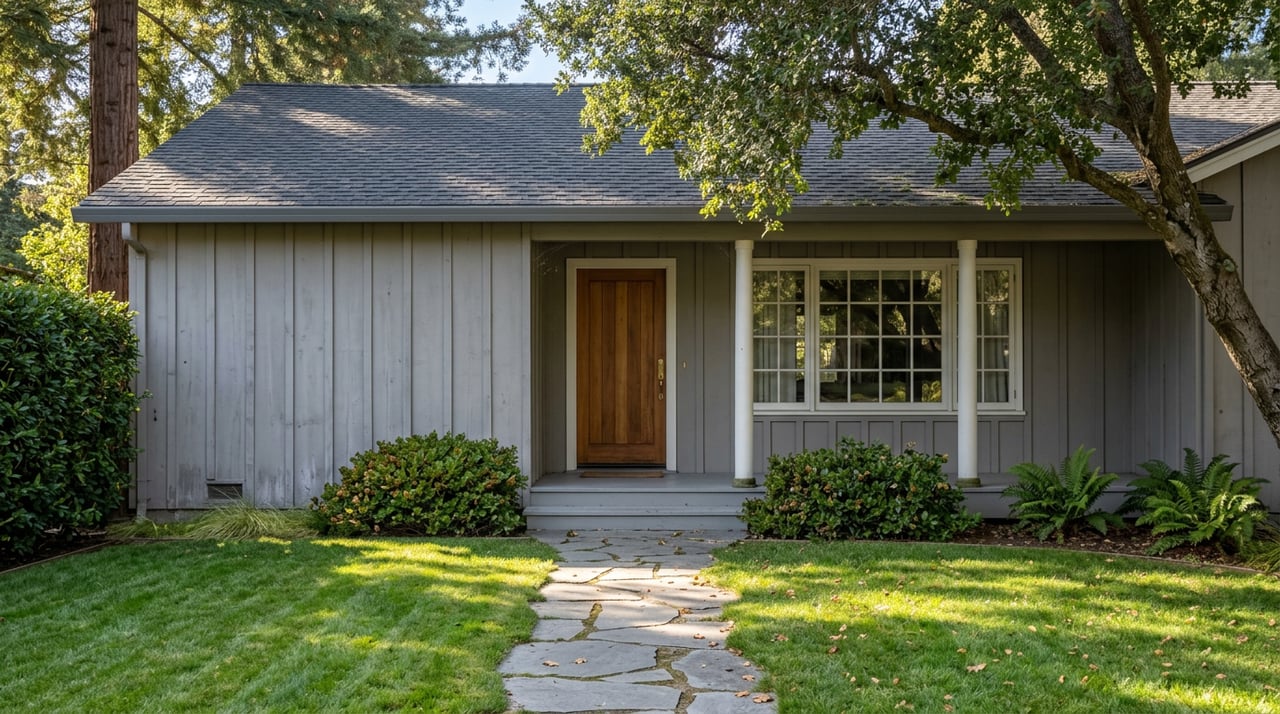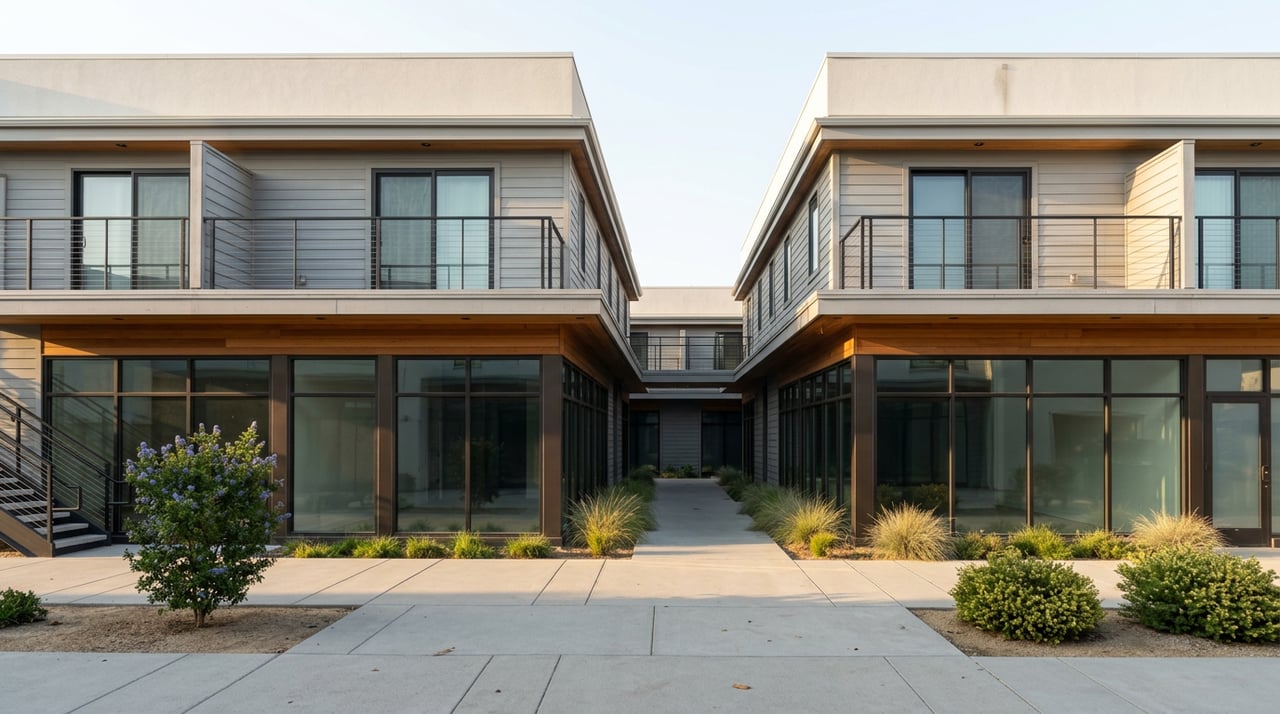
Walk the two blocks of Aptos Village Way today and you'll see New Leaf Community Market anchoring one end, chef David Kinch's restaurant Mentone tucked into a storefront near Trout Gulch Road, and a scatter of new condo buildings that finished construction just last year. Ask the listing agent what a two-bedroom unit costs and you'll get a number in the $1.2 to $1.3 million range. Ask a different agent about the unit two doors down, and you might hear the same number.
What neither agent will volunteer unless you ask: five of those units cannot appreciate the way the other twenty-four can. Same square footage, same finishes, same walk to the same coffee shop. Legally, financially, a different asset.
That's the part the median price on a portal search never shows you, and it's the reason anyone comparing Aptos Village to an existing house nearby needs to look past the sticker.
The Five Units That Play By Different Rules
Aptos Village Phase 2 finished construction in May 2025, adding 29 homes to the 36 that Phase 1 delivered back in 2019. Of those 29, five were sold as deed-restricted affordable units through the county's Measure J program, a lottery system that dates back to a 1978 voter initiative and has produced several hundred below-market homes across Santa Cruz County over the decades.
The mechanism is straightforward once you see it: a Measure J buyer purchases at a below-market price, but a resale formula built into the deed keeps that price from climbing to match the open market. When that owner eventually sells, the next buyer pays close to what the current owner paid, not what a comparable market-rate unit down the street is worth. The appreciation that a market-rate condo owner in the same building will see over ten or twenty years simply doesn't transfer to the Measure J owner. It's not a bad deal for the buyer who needed the lower entry price. It is a fundamentally different investment than the unit next door.
If you're touring Aptos Village and a unit's price looks unusually low for the square footage, that's the first question to ask: is this one of the five, or one of the twenty-four?
What the Other Twenty-Four Actually Cost, Month to Month
For the market-rate units, the Aptos Village FAQ lists two-bedroom condos starting at $1,265,000 and three-bedroom units starting at $1,535,000. Press coverage from around the completion date quoted a two-bedroom closer to $1,299,000, a gap that likely reflects unit-specific upgrades or which floor and view a given home has.
The number that matters more for long-term math is the one that doesn't show up in the headline price. HOA and CC&R fees at Aptos Village run roughly $350 to $600 a month depending on unit size and location, according to the developer's own Q&A with the Aptos Village project's vice president of development.
Run that through a simple ten-year check. At the midpoint, $475 a month, an owner pays about $5,700 a year.
Over a ten-year hold, that's roughly $57,000 in HOA dues alone, money a detached Aptos homeowner two blocks away doesn't spend on that line item at all.
That's not an argument against buying the condo. Detached homes carry their own costs the HOA absorbs here, from roof repairs to landscaping to exterior paint. But it's a cost that needs to sit next to the purchase price when you're comparing two properties that look similar on a listing sheet, not buried in a disclosure packet you read after you've already fallen for the granite countertops.
The Existing-Home Comparison Nobody's Updating in Real Time
Here's where the story gets more interesting than "new costs more" or "new costs less." As of late July 2026, Zillow's home value index for Aptos put the typical home value at $1,348,891, up 1.5% over the prior year. That's within shouting distance of what a market-rate two-bedroom condo at Aptos Village costs today.
Zoom out to the county level and the picture shifts. Redfin's data for the three months ending May 2026 shows Santa Cruz County's median sale price at $1.1 million, down 4.5% from the same period a year earlier, with homes selling faster on average, about 16 days compared to 25 days the prior year. The city of Santa Cruz specifically sat closer to $1.4 million over that same window, essentially flat year over year.
Meanwhile, a different data source tracking single-family home sales specifically put the average Aptos sale price at roughly $1,800,000 in 2024, up from about $1,388,000 in 2020. That figure is measuring something different than Zillow's index, an average of actual detached-home closings rather than a blended estimate across condos and houses, which is part of why the two numbers don't line up neatly. Both are legitimate. They're just not answering the same question.
What that divergence tells a buyer comparing Aptos Village to an existing house: the county-wide median has softened slightly in 2026, but detached homes specifically in Aptos have historically carried a premium over the blended average, and that premium hasn't disappeared. A new condo priced in the $1.3 million range isn't necessarily cheaper than an equivalent detached home nearby. It may be roughly the same price for a different set of tradeoffs: no yard, an HOA, and for five unlucky (or lucky, depending on your goals) buyers, a resale cap.
The Walkability Is Already Priced In
None of this is a knock on the location. Aptos Village earned its town-center reputation honestly. New Leaf Community Market operates out of the historic Hihn Apple Barn, a structure that was physically moved 300 feet across the site and restored rather than demolished. Penny Ice Creamery and Cat & Cloud Coffee sit within the same walkable footprint, alongside Sockshop & Shoe Company, Sante Arcangeli Family Wines Tasting Room, and Cafe Sparrow. Mentone, from three-Michelin-star chef David Kinch, sits at 174 Aptos Village Way. Aptos St. BBQ rounds out the mix a short walk away.
The development also sits at the doorstep of the Forest of Nisene Marks, roughly 10,000 acres of hiking and mountain biking trails, and the project includes a 24,000-square-foot parcel that will eventually be deeded to Santa Cruz County for a future park.
The original plan called for 69 homes across the full build-out. The finished project delivered 65. Plans shift over a decade of construction, and buyers touring the finished product today are seeing the version that actually got built, not the version pitched in early renderings.
All of that amenity value is already baked into the price you're seeing. It is not the variable that separates one $1.3 million Aptos Village unit from another, or from a $1.3 million house a mile inland. The HOA structure and the deed restriction are.
Before You Write an Offer at Aptos Village
- Ask directly whether the specific unit is one of the five Measure J affordable units or one of the twenty-four market-rate units. The answer changes the entire investment calculus.
- Request the current HOA budget and reserve study, not just the fee amount. A well-funded reserve now can mean smaller special assessments later.
- Get the exact resale formula in writing if you're considering a Measure J unit. "Capped appreciation" can mean different things depending on how the formula is structured.
- Compare total monthly carrying cost, not just purchase price, against any detached home you're considering. A $100,000 difference in price can disappear fast against a decade of HOA dues, or the math can go the other way if the detached home needs a new roof.
- Confirm which phase you're looking at. Phase 1 (2019) and Phase 2 (2025) were built under different timelines and may carry separate governing documents.
A Short FAQ
Are all the homes at Aptos Village deed-restricted? No. Only five of the 29 Phase 2 units were sold through the Measure J affordable housing lottery. The other 24 Phase 2 units are market-rate. Phase 1, completed back in 2019, was built and marketed separately, so confirm its unit-by-unit status with your agent rather than assuming it mirrors Phase 2's ratio.
What happens if I want to sell a Measure J unit down the road? The resale price is governed by a formula in the deed that keeps the home affordable for the next qualified buyer, which means the seller doesn't capture the same appreciation a market-rate owner would. Ask the county planning department or your agent for the specific formula attached to that unit before you buy.
Is now a good time to buy at Aptos Village compared to an existing Aptos home? It depends on what you're optimizing for. County-wide prices softened slightly over the three months ending May 2026, while Aptos specifically has held closer to flat to slightly up. Neither trend answers the HOA and deed-restriction questions above, which matter more to your long-term numbers than a few percentage points of month-to-month price movement.
If you're weighing a new condo at Aptos Village against a house somewhere else in town, the sticker price is only the opening question. The HOA statement, the CC&Rs, and the deed itself tell you what you're actually buying. I've spent years walking Santa Cruz County buyers through exactly this kind of comparison, line by line, before they sign anything. If you'd like a second set of eyes on a specific unit or a specific house, reach out to Stacey H. Mitchell. Let's Connect.