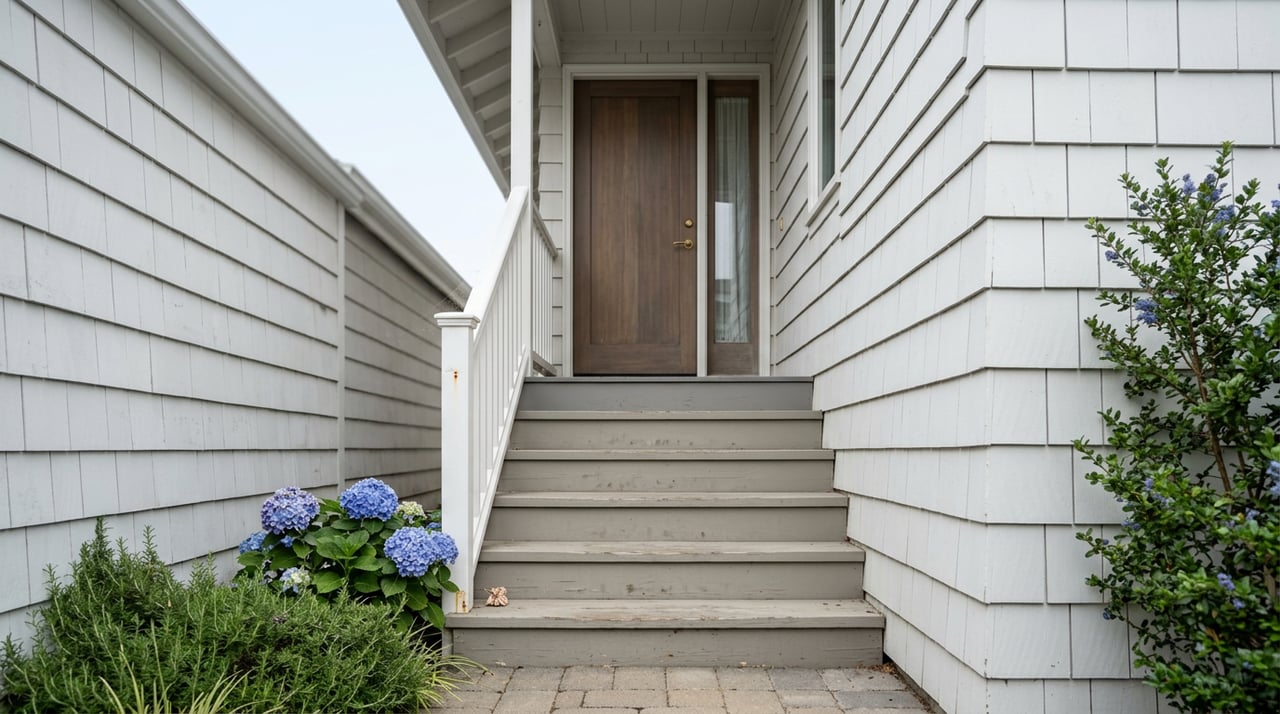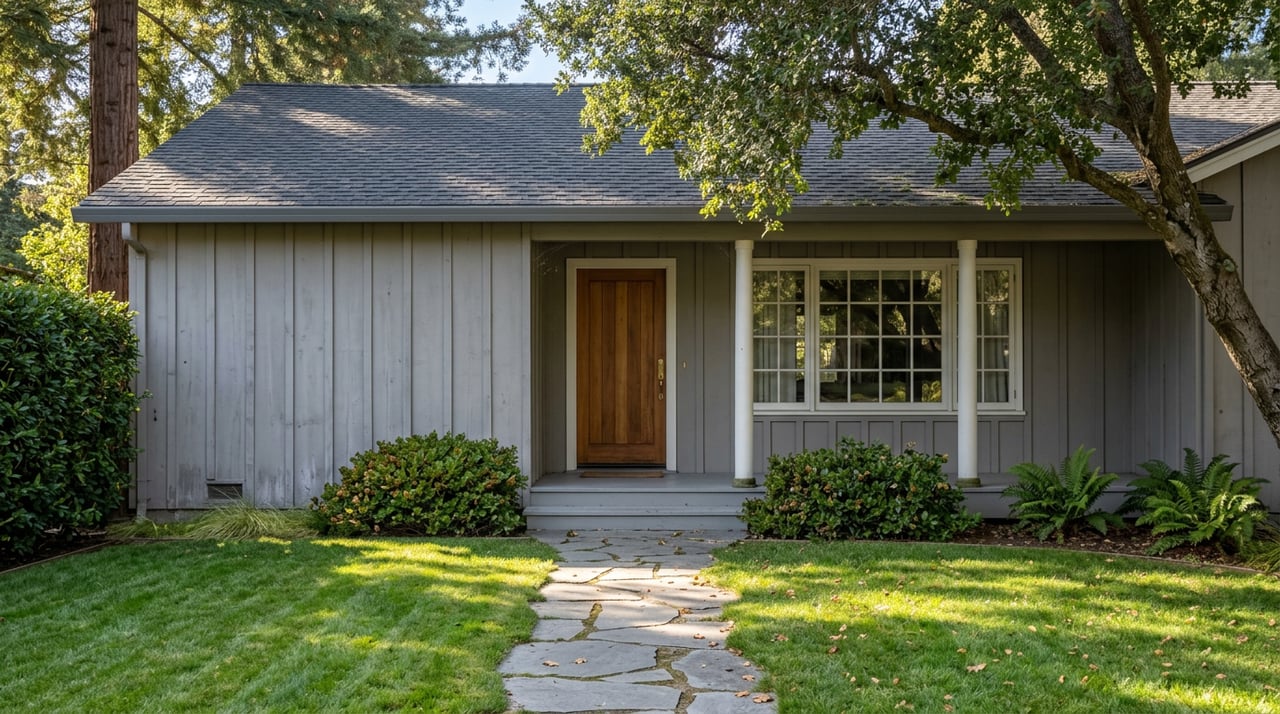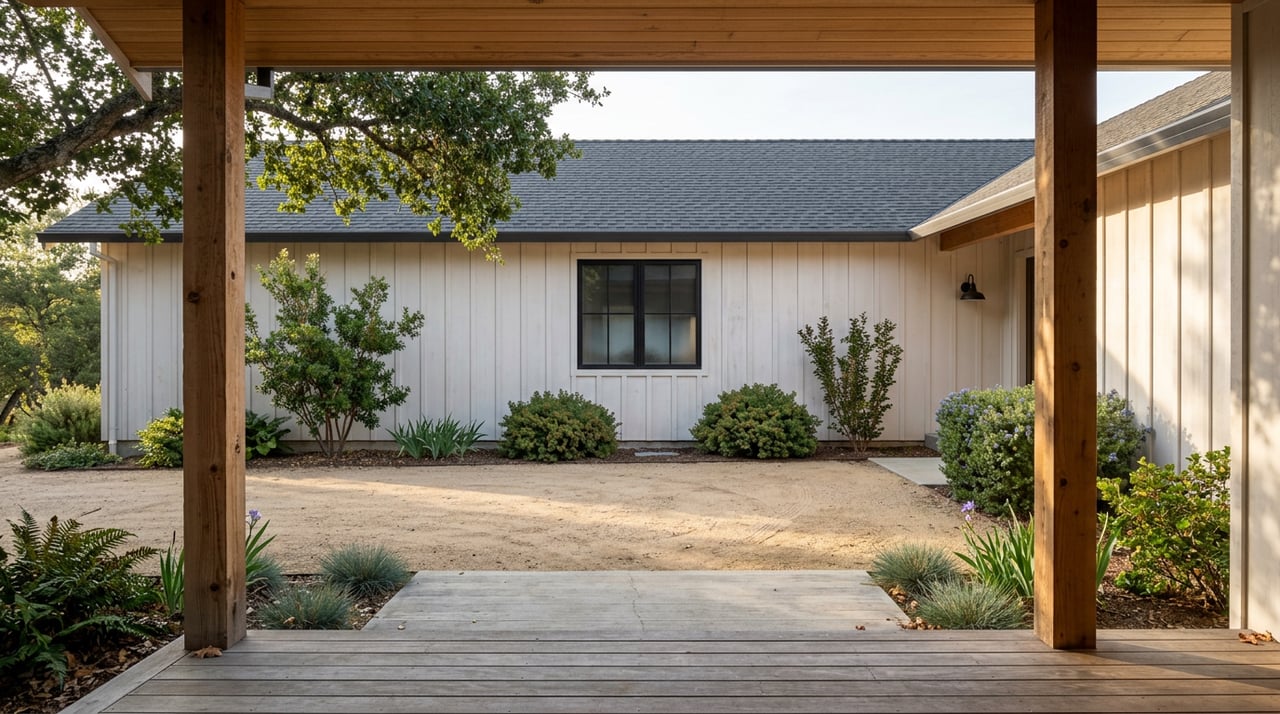
If you own a home in the Soquel hills, off Old San Jose Road, up Rodeo Gulch, along Laurel Glen, or on any parcel outside the Soquel village sewer footprint, the calendar for selling your house is no longer set by your stager or your paint crew. It is set by a licensed liquid waste hauler, a state-certified water lab, and the Santa Cruz County Environmental Health inbox at [email protected].
Two point-of-sale programs have layered onto the transaction in the last three years. Sellers who understand them treat listing prep as an eight-to-ten-week runway. Sellers who do not tend to find the delay at the worst possible moment, usually after the buyer's inspection contingency has already been released.
Two ordinances quietly rewrote the escrow calendar
The first is the septic rule. As of July 1, 2023, Santa Cruz County requires a septic system inspection and pumping report for any real estate sale involving an onsite wastewater treatment system, and this applies to homes with septic tanks in both unincorporated and incorporated areas of the county. The requirement lives in County Code Section 7.38.216, and it obligates the seller to identify defects, complete repairs to County OWTS standards, or transfer that obligation to the buyer in writing.
The second is newer, and most sellers I speak with have not heard of it. Starting September 1, 2025, properties with private wells must undergo point-of-sale well inspections, with sellers required to conduct tests on both the yield and water quality, and results shared with both the buyer and Santa Cruz County Environmental Health. This mirrors the septic framework and applies to any Individual Water System, a category that covers most of the ridge-top and canyon properties in Soquel outside the Soquel Creek Water District boundary.
Neither program is a soft recommendation. Both require a form filed with the County before close.
What actually happens once the truck pulls in
Here is the sequence a Soquel seller now walks through, in the order it hits the calendar:
- Schedule a licensed liquid waste hauler to pump and inspect the septic tank. A flow test using at least 250 gallons of water is required to confirm that the system is functioning correctly, and the inspection must be completed by a licensed liquid waste hauler with the report submitted to the County's Environmental Health Division using the appropriate forms.
- If the home is on a private well or spring, schedule a licensed well contractor or pump tester for a yield test and a state-certified lab for Title 22 water quality analysis. Real estate agents and other unqualified parties are not authorized to conduct and interpret these tests.
- Complete the County's "Water Source Evaluation upon Transfer of Property" form and email it, with the lab report, to the County.
- Deliver the septic disclosure and any active service agreement to the buyer as part of the transfer package.
Only after all of that clears do you get to a signable escrow.
The number that reorders everything
Here is the fact that changes how a listing plan should be built.
The flow test takes anywhere between 30-60 minutes onsite but the lab testing can take 3-5 weeks in order to receive the results. That is not a septic problem. That is a lab problem. A five-week lab turnaround on a well test can be longer than the entire escrow you were hoping for.
Which means the gating item on a Soquel hillside sale is not the buyer's loan and not the appraiser. It is a queue at a state-certified water lab in San Jose or Salinas. If you list before you order the tests, you are asking a buyer to wait on chemistry results the seller could have started weeks earlier. Most buyers, and most listing agents on the buy side, will not accept that risk without a price concession.
The septic inspection and pumping report is valid for 12 months prior to the close of escrow, so there is no penalty for starting early. There is a meaningful penalty for starting late.
When the system does not pass
Failure is where sellers get hurt. The cost of a replacement is not a rounding error against a Soquel sale price. Local numbers from installers who work these hills:
| Repair path | Approximate cost | Realistic time to permit and complete |
|---|---|---|
| Gravity-flow tank or leach field replacement | around $15,000 | weeks, if soil and space allow |
| Pump-up system, needed when leach field sits above the house | starts around $25,000 | weeks to a couple of months |
| Alternative Treatment System, engineered | $45,000 to $80,000 or more | up to eighteen months for the approval process |
The cost band comes from a typical gravity flow system running around $15,000 for a tank or leach field replacement, and a pump up system, required when the leach field is above the house, starting at $25,000, with the installation of a new ATS ranging from $45,000 on the low end with perfect property conditions to $80,000 or more, depending on system design, property size, soil type, and system capacity requirements.
Two Soquel-specific realities to sit with. First, while the latter may seem more economical, it's only viable if your property has sufficient space for a new leach field, and in Santa Cruz County, especially in the mountainous and rural areas, many properties lack the necessary expansion fields due to factors like size, slope, groundwater, and zoning restrictions. Second, your septic may pass inspection in the summer when you buy your property, then actually fail in the winter rains. A February listing behaves differently than a September listing on the same parcel.
Transfer of Responsibility, and what it is not
There is a release valve. The buyer can choose to accept the responsibility for making the repairs by completing and filing a "Transfer of Responsibility" form with County EH. If both parties sign, the responsibility to complete the repairs within 90 days can be transferred to the buyer.
This is useful. It is not a free pass. A buyer taking on a possible ATS install is a buyer negotiating hard on price, or asking for a large credit at close, or walking. My honest read after watching several of these transfer, and several fall apart, is that the form works well for known small repairs and works poorly when the inspection surfaces something the seller did not disclose because the seller genuinely did not know. Buyer trust is the currency of a rural transaction, and a late-breaking OWTS surprise spends it faster than any other item on a disclosure package.
Where Soquel water rules land, and where they do not
There is one piece of good news specific to the Soquel Creek Water District footprint. The Soquel Creek Water District ended its Retrofit on Resale program effective June 1, 2018. If your property is inside that district, you are not chasing a water conservation certificate on top of everything else.
Sellers outside the district, or on a well, live under a different rule. The County ordinance applies to properties in the unincorporated area outside the city limits of Capitola, Santa Cruz, Scotts Valley and Watsonville that are not served by the City of Watsonville or other public water supplier who administers a similar water conservation program, and all properties at the time of sale must retrofit water fixtures that do not meet high efficiency standards, restricting maximum flow from showerheads to 2 gallons per minute and toilets to 1.28 gallons per flush. Existing toilets using 1.6 gallons per flush or less do not need to be replaced. Confirm your water purveyor before you assume which set of rules covers your parcel.
State law still runs underneath all of this. California SB 407 requires disclosure of non-water-conserving plumbing fixtures on transfer, and standard forms will cover that step.
A working timeline for a Soquel seller
Here is what a low-stress calendar looks like for a hillside Soquel home on septic and a private well, working backward from a target close.
Eight to ten weeks out: Book the well yield test and the Title 22 lab work. Schedule the licensed liquid waste hauler. Pull any prior OWTS permits from County Environmental Health so you know what system you actually have.
Six weeks out: Septic pumping and inspection complete. Well lab work in progress.
Four weeks out: Lab results in hand. Water Source Evaluation form filed. Any small repairs completed under permit.
Listing week: Full disclosure package assembled with septic report, well testing, service agreements, and any Transfer of Responsibility drafts ready in case negotiation goes there.
That runway is not overkill. It is what buys you the ability to price with confidence and to say yes to a strong offer without asking anyone to wait on chemistry.
A short FAQ
Do I need any of this if my Soquel home is on public sewer and Soquel Creek water? The septic ordinance does not apply. The well ordinance does not apply. You are on the standard California disclosure track. Confirm the sewer connection early; a few older Soquel village homes still surprise their owners.
What if the inspection is a year old? The updated timeframe was confirmed in the County's OWTS Disclosure Advisory, which clarified that the previous six-month limits were extended to reduce redundant inspections and pumping, so a septic inspection is good for twelve months before close. Well testing is closer to real-time and should be current for the listing.
Are there properties that skip the septic program entirely? Yes. Exemptions include properties served by public sewer, undeveloped parcels, properties that have a new OWTS installed under permit within 5 years, properties that have an OWTS which has been repaired or upgraded under permit within 3 years, and transfers without consideration or transfers between existing co-owners including gifts between family members, transfers due to death via joint-tenancy, probate transfers, and trust distributions.
Can a buyer waive the well test? Not in a way that satisfies the County. The seller's obligation to file the form is independent of the buyer's willingness to look the other way.
Selling a Soquel home on septic or a private well is not harder than it used to be. It is longer, and the longest item on the list is one no one can rush once the sample is in the truck. Start the inspection work before you pick paint colors, not after, and the rest of the sale becomes what it should be, which is a conversation about the house.
If you are thinking about a Soquel listing in the next six to twelve months, or you just inherited a property up one of the canyons and are trying to figure out where to start, I am happy to walk the parcel with you and map out a realistic runway. Stacey Mitchell works with hillside sellers across Soquel and Santa Cruz County every year. Let's Connect.